

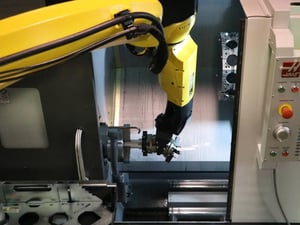
Manufacturers can improve spindle utilization, minimize repetitive machine tending, and create more predictable production workflows by integrating robotics into existing CNC operations. But successful CNC automation integration involves more than connecting a robot to a machine.
It is critical for businesses to consider machine compatibility, part handling, workholding, and changeovers, as well as the floor layout, operator involvement, and future manufacturing requirements.
A structured approach enables manufacturers to identify the right automation opportunity, prepare their operation, and implement a robotic system with minimal disruption to production.
Quick Links
- CNC Robotics Integration Starts Before Installation
- What Is CNC Robotics Integration?
- Is Your Current Operation Ready for CNC Robotics?
- Selecting the Right Automation Approach
- A CNC Robotics Integration Roadmap
- Common Mistakes During CNC Robotics Integration
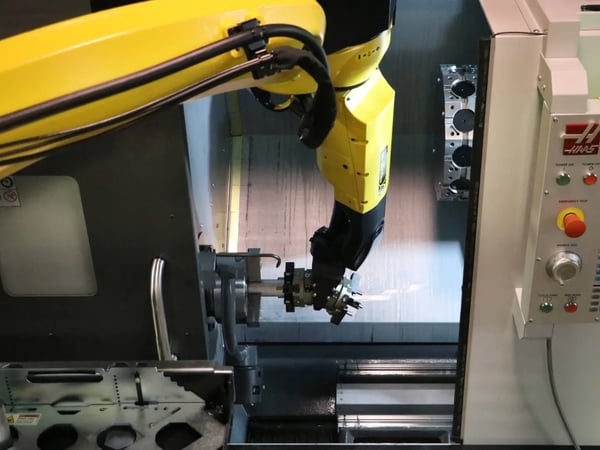
CNC Robotics Integration Starts Before Installation
Rather than beginning by evaluating robot specifications, it is beneficial to prepare for CNC robotics integration by first understanding the manufacturing operation the robot will support.
For instance, a CNC lathe that frequently sits idle while an operator loads and unloads parts may be an ideal candidate for robotic machine tending. However, the robot is only one part of the solution, which also includes workholding, part presentation, machine access, cycle times, and other factors that affect operational performance.
Before installation, it's beneficial for manufacturers to understand these aspects so they can select an appropriate solution and avoid creating additional bottlenecks.
What Is CNC Robotics Integration?
Quick Answer: Integrating CNC robots is the process of connecting robotic solutions to CNC machines, workholding, material flow, operators, and production processes to produce a reliable and repeatable manufacturing operation.
A CNC robotics system may load raw material into a machine, unload finished parts, transfer components between operations, or handle parts between machines.
Integration connects these automated functions with a broader manufacturing process. The entire robotic cell—CNC machine, robot, grippers, controls, etc.—depends on the application. Overall, the purpose is to build a coordinated workflow where the machine, robot, operator, and supporting equipment work together effectively.
Is Your Current Operation Ready for CNC Robotics?
Before investing in a CNC machine tending robot, manufacturers need to evaluate their existing workflows and determine where automation can provide the greatest value.
Analyze Your Production Environment
During the review, it is important to consider:
- Production volume and cycle times
- Machine utilization
- Operator involvement
- Workflow bottlenecks
- Part mix and complexity
- Changeover frequency
When evaluating, look for repetitive processes that demand operators to spend significant time tending multiple machines or leaving a machine idle while performing other job tasks.
Changeovers in high-mix operations are essential. A solution optimized for one high-volume part may not be ideal for a shop producing numerous part variations.Evaluate Cell Layout Considerations
A CNC robotic cell requires space for more than the robot itself. Analyze floor space, robot reach, machine access, operator reach, material presentation, as well as maintenance access, safety requirements, and material flow.
It is best to consider automation early in the planning phase instead of trying to fit an automation system into a process layout designed entirely around manual operation.
Align Automation with Business Objectives
Establish automation goals before selecting a robot automation solution.
Common objectives include:
- Optimizing equipment utilization
- Decreasing repetitive manual handling
- Increasing production consistency
- Supporting lights-out or unattended manufacturing
- Addressing operator availability
- Creating more repeatable workflows
To prepare for CNC robotics integration, having clearly defined goals provides measurable benchmarks for evaluating the automation system after implementation.
If the business's primary goal is to improve machine utilization, manufacturers can compare uptime before and after automating. Or, if the objective is to reduce manual work, the amount of operator time dedicated to repetitive loading and unloading can become a critical performance measure.
Selecting the Right Automation Approach
Not every CNC robotic machine tending solution is appropriate for every application. The right approach depends on specific requirements of the CNC operation, not just the robot's capabilities.
Evaluate Part and Application Requirements
It is important to understand the parts that are being produced to determine the appropriate automation configuration.
Evaluate factors such as:
- Part dimensions, weight, and geometry
- Material and number of part families
- Production volume and cycle times
- Part orientation and presentation
- Changeover requirements
Part variation plays a critical role for manufacturers operating in high-mix production environments. It's best to design the robotic automation cell around efficient changeovers rather than optimizing it for a single production run when employees frequently shift between projects.
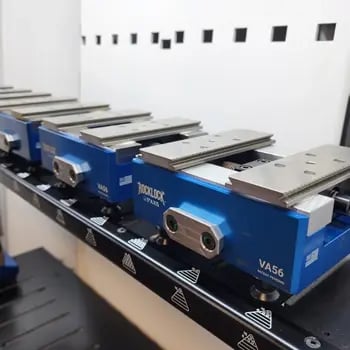 The requirements for the gripper configuration, workholding, part presentation, and programming should also be factors when considering the CNC application.
Align Robotics with Your CNC Machines
Often, existing CNC equipment can be incorporated into an automation strategy, but compatibility should be assessed prior to installation.
Review the machine's:
- CNC control and communication capabilities
- Door configuration and machine access
- Workholding and spindle orientation
- Part envelope
- Chip and coolant management
The integration must allow the robot to reliably access the machine and perform required actions, such as loading and unloading, without interfering with the machining process.
A thorough compatibility assessment early on can help identify and prevent unexpected modifications during installation.
Plan for Operational Flexibility
Manufacturing requirements rarely remain static, and robotic automation should be able to meet today's production demands and scale to support future growth.
Consider whether the robot cell can accommodate additional part numbers, different part sizes, future production increases, or additional machinery. A manufacturer may benefit from a CNC robot integration system that supports multiple part types rather than a solution designed around a single component.
Taking the time to prepare a flexible automation unit can yield greater long-term manufacturing investment and make it easier to adapt as operational needs change.
A CNC Robotics Integration Roadmap
While every operation is unique, a well-structured approach can help manufacturers move from an initial automation opportunity to a production-ready robotic cell.
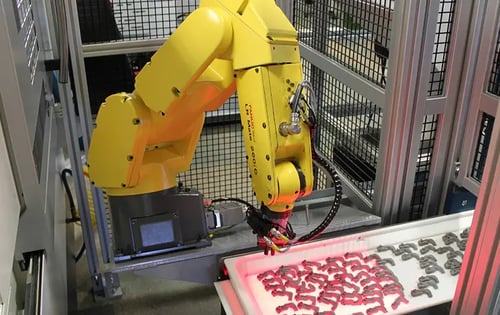
Step 1: Define the Manufacturing Application
Begin by documenting the current manufacturing process to identify and establish what the robotic automation must accomplish.
Identify the machines involved, the parts being machined, the cycle time for each, the production volumes, the operator responsibilities, and the desired automation outcomes.
Gathering this information helps establish the robotic system's requirements and determine whether this specific application is an ideal candidate for automation.
Step 2: Design the Automation Workcell
Once the application is defined, develop the cell's physical and operational layout around the machine(s), robot, parts, operators, and material flow.
The manufacturing process design should account for the robot's placement and reach, part presentation, machine and operator access, as well as safety, maintenance, and future expansion.
The objective is to produce a cell that minimizes unnecessary movement while keeping the equipment accessible.
Step 3: Prepare CNC Equipment and Operators
An essential part of implementation is ensuring that the machine and supporting equipment are ready to integrate. It's important to verify that the CNC machine, workholding, tooling, and other assets are prepared for the automated process.
Another critical aspect in preparing for CNC robotics integration is ensuring your employees are equipped to begin production runs. The workforce should receive training on operating the automated system, managing changeovers, responding to alerts, and performing routine tasks.
Automation changes how workers interact with the process, so prepping them in advance can make the transition smoother and help build confidence in the system.
Step 4: Test and Validate the Process
A critical part of integrating CNC robotics is testing the complete automated workflow before transitioning to full production.
Thus, confirm that the robot can consistently and reliably load and unload parts, that the CNC machine and robot communicate correctly, that workholding functions properly, and that safety systems operate as intended.
Essentially, testing provides the opportunity to detect and resolve issues in advance, instead of causing production failures.
Step 5: Monitor and Optimize Performance
CNC robotics integration does not necessarily end when the automation cell begins operations. It's important to monitor the system after implementation to determine whether it is achieving the original objectives.
Therefore, track spindle utilization, manufacturing output, cycle time, downtime, changeover time, operator involvement, and any other relevant performance indicators.
Ongoing observations of production data and operator feedback can reveal opportunities to refine the process, streamline material flow, adjust programming, or identify additional factors for long-term success.
Common Mistakes During CNC Robotics Integration
Even with strategic preparation, CNC robotics integration can encounter challenges if key factors are disregarded. To create a smooth implementation, it's important to keep the following mistakes in mind.
- Starting with the robot instead of the application. First, define the manufacturing bottleneck, then select the robotics solution that best supports the operation and production goals.
- Trying to automate an inefficient process. Optimize workflows before automation to avoid accelerating current challenges and inefficiencies.
- Ignoring material flow and workflow design. Consider how the robot fits seamlessly into the overall production flow, rather than disrupting movement between operations.
- Planning for today instead of tomorrow. Decide on a solution that can adapt to long-term operational demands, new part families, and additional automation opportunities.
Focusing on the application, process, workflow, and future flexibility can help manufacturers build a stronger framework for successfully integrating robotics.
Frequently Asked Questions About CNC Robotics Integration
Ready to Integrate CNC Robotics?
Effective CNC robotics integration requires more than selecting a robot. From reviewing the application and workflow to preparing operators and planning for future needs, every step contributes to an automation strategy that improves CNC operations and supports long-term production goals.
Whether evaluating robotic machine tending for a single machine or designing a broader automation initiative, AWR can help identify the right integration approach for your operation.
