

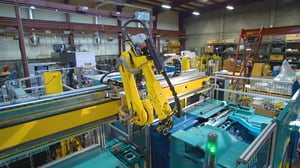
Manufacturers are under constant pressure to increase output, maintain quality, and overcome labor shortages. CNC automation helps manufacturers meet these demands by automating repetitive tasks and keeping machines running longer with less manual intervention.
Whether you're a job shop exploring your first automation project or a manufacturer looking to expand capacity, understanding how CNC automation works is the first step.
What is CNC Automation?
CNC automation is the use of robots, software, sensors, and automated systems to perform machining-related tasks with minimal operator intervention. Rather than relying solely on manual labor, automated CNC systems handle repetitive activities such as loading raw material, unloading finished parts, transferring workpieces, performing inspections, and managing tooling.
Automation can range from simple bar feeders and pallet changers to fully integrated robotic machine tending systems capable of running unattended for extended periods. For many manufacturers, machine tending is the first step in automation because it increases spindle uptime without replacing existing CNC equipment.
Benefits of CNC Automation for Manufacturers
CNC automation helps job shops and manufacturers enhance precision and improve overall production, offering benefits that extend beyond labor savings.
Increased Machine Utilization
Manual loading and unloading often causes machines to sit idle between cycles. Robotic machine tending reduces this lower-value task, which enables shops to keep spindles cutting longer. Typically, higher spindle utilization means throughput increases and a quicker return on investment.
Improved Labor Efficiency
As many shops struggle to find skilled operators to set up, program, and maintain the machining process, CNC automation frees up machinists to tend multiple machines or focus on higher-value tasks. This provides employees with an opportunity to enhance their skill sets, adding value and boosting overall morale.
Greater Production Consistency
Automated machine systems perform tasks in exactly the same way, every cycle, to produce identical parts — reducing variability and improving overall part consistency. With consistent processes, manufacturers can achieve: lower rework costs, reduced scrap, improved quality, and greater customer satisfaction.
Support for Lights-Out Manufacturing
Many automated CNC cells can continue operating during breaks, shift changes, evenings, or weekends with minimal supervision. Extending production beyond traditional shifts allows manufacturers to increase capacity without adding labor by operating during lights-out.
Improved Workplace Safety
CNC machine tending enhances safety by automating repetitive or physically demanding tasks. Limiting operators' exposure to hazardous environments, heavy parts, and moving machinery reduces the risk of workplace accidents and injuries.
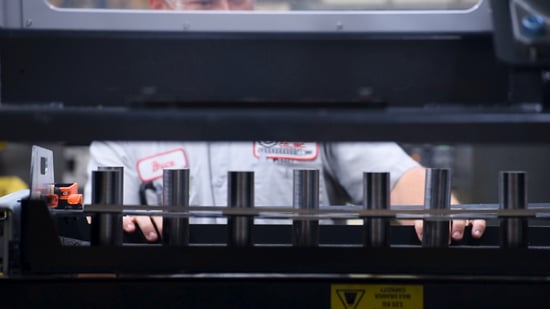
What Manufacturing Processes Can Be Automated?
Modern CNC solutions can automate numerous production tasks throughout the manufacturing process.
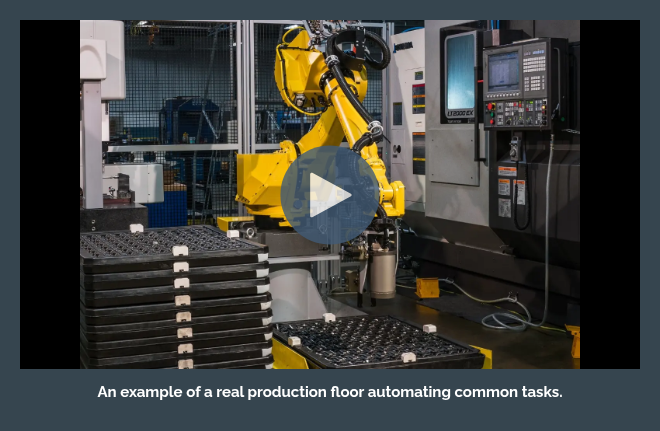
Machine Tending
Robots load raw materials into a CNC machine and remove the completed parts after machining, reducing machine downtime and increasing productivity.
Part Handling and Transfer
Automated systems can transfer parts between machining operations, secondary operations, inspection stations, or packaging areas while minimizing manual handling.
Inspection and Quality Control
Integrated cameras, probes, and sensors can automatically verify and detect defects early in the production process while improving traceability and documentation.
Pallet Handling
Automated pallet systems reduce setup times and make it easier to manage multiple part numbers, especially in high-mix, low-volume environments.
Industries Integrating CNC Automation
CNC automation is utilized by manufacturers across a wide range of industries:
- Automotive: Engine components, gears, brake systems, and transmission parts in repeatable, high-volume productions
- Aerospace: Strict quality control and traceability for complex components, such as turbine blades, structural components, and landing gear parts
- Medical: Maintains tight tolerances and consistent quality when manufacturing surgical instruments, implants, and precision components
- Electronics: Requires micro-machining of tiny, intricate components such as connectors, housings, and chip carriers
- General Job Shops: Automation increases spindle uptime, offsets labor shortages, and supports lights-out production
CNC Automation Challenges to Consider
While CNC automation provides clear advantages, it requires thoughtful implementation to deliver consistent results. Manufacturers should evaluate several factors before investing.
Upfront Investment
Automation solutions require an initial capital investment that may include robotics, workholding, integration, training, and support. However, many shops achieve ROI through increased productivity and improved machine utilization.
Process Stability
Successful robotic automation depends on stable and repeatable machining processes. Prior to automating, manufacturers should evaluate their current operation: part variation, cycle consistency, tool life, fixturing reliability, and changeover requirements.
Integration Complexity
Ensuring compatibility across CNC machines, tooling, software, workholding, and other production processes requires careful planning. To simplify implementation and reduce risks, it's best to work with an experienced automation partner.
Employee Training
Robotic machine tending doesn't eliminate the need for skilled workers; instead, it shifts operators' responsibilities to higher-value tasks. Therefore, providing training throughout helps employees confidently run and maintain CNC automation for long-term success.
Tips for Successfully Implementing CNC Automation
Businesses considering CNC automation can optimize results by following several implementation best practices without introducing unnecessary downtime.
-
Start with a repetitive, high-impact application that frequently experiences downtime or long cycle times
-
Define measurable objectives and clear goals, such as increasing spindle utilization or reducing labor requirements
-
Choose flexible automation solutions that can adapt as product needs evolve
-
Partner with experienced CNC automation specialists who offer integration, training, and support
For many job shops, machine tending provides the fastest and least disruptive entry point into automation.
Take the First Step Toward CNC Automation
CNC automation can help manufacturers increase productivity, improve quality, and overcome labor challenges without expanding headcount. Whether you're exploring automation for a single machine or an entire production line, identifying the right application is the key to long-term success.
If you're exploring automation solutions for your operation, speak with the AWR team to help identify the best path forward.
Frequently Asked Questions
Q: Can existing CNC machines be automated?
A: Yes. Many existing CNC machines can be retrofitted with robotic automation, allowing manufacturers to improve productivity without purchasing new equipment.
Q: Is CNC automation worth it for small job shops?
A: Yes. Many small and mid-sized job shops implement machine tending automation to increase spindle utilization, reduce labor constraints, and expand production capacity.
Q: Is CNC automation only for large manufacturers?
A: No. Advances in robotics and pre-engineered automation systems have made CNC automation accessible to manufacturers of all sizes, including small and mid-sized job shops.
Q: How long does it take to see ROI from CNC automation?
A: ROI varies by application, production volume, and labor costs, but many manufacturers see returns through increased throughput, improved machine utilization, and reduced downtime.
