Achieve More Consistent Results with Precision Manufacturing Automation
As manufacturers face increasingly stringent quality requirements, such as tighter tolerances, increasingly complex parts, and higher quality expectations, maintaining precision throughout the operation is becoming more challenging.
Precision manufacturing automation helps create consistent, repeatable workflows that support quality objectives and reduce variation across production runs. By integrating a CNC machine with automation technologies, robotic machine tending, manufacturers can improve process stability and boost the production of high-precision components across a variety of industries.
What Is Precision Manufacturing Automation?
Quick Answer: Precision manufactuing automation combines CNC machining and automation to optimize consistency, reduce inconsistencies, and help manufacturers predictably produce parts that meet strict specifications.
Unlike traditional CNC automation strategies primarily focused on increasing output, automated precision manufacturing emphasizes consistency, repeatability, and process control. The goal is to create stable production environments that can meet exact quality requirements.
Why Precision Manufacturing Requires Automation
Producing high-precision components demands more than advanced machine tools; it requires consistent processes that can repeatedly achieve the same result, cycle after cycle.
High precision helps reduce deviations in dimensions, positioning, or part handling, which can impact quality outcomes. While CNC machines can produce highly accurate parts, it's critical that manufacturers have a stable operational workflow to support those capabilities throughout an entire production run.
Automation helps standardize repetitive tasks and reduces the likelihood of process variation across manufacturing operations. By establishing a more predictable workflow, manufacturers are more likely to meet quality standards, streamline processes for stability, and maintain consistency as production requirements evolve.
Automated Precision Manufacturing Helps Manufacturers:
-
Obtain more reliable production results
-
Enhance operational control
-
Optimize repeatability each cycle
-
Gain greater support for quality objectives
The result is a manufacturing environment where consistent quality stems from repeatable automated workflows, reducing reliance on operator intervention.
Supporting Tight-Tolerance Manufacturing
Many industries rely on components manufactured to extremely accurate specifications. Aerospace, medical device, automotive, and electronics manufacturers typically require repeatable operations that maintain strict quality standards.
As tolerances tighten and part designs grow more complex, it's become more important to maintain consistency throughout manufacturing. When precision requirements are high, small process inconsistencies that may be insignificant in other applications can cause a major impact.
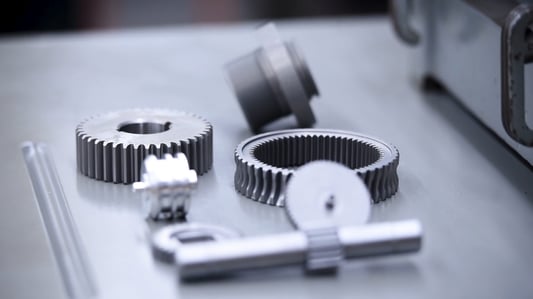 CNC automation alleviates tight-tolerance manufacturing by producing more predictable production conditions. Standardizing repetitive responsibilities enables manufacturers to more easily meet precision machining requirements by gaining better control over consistency and quality across production runs.
Tight-Tolerance Production Requires:
- Consistent, stable processes
-
Repeatable operations
-
Reliable part handling
-
Quality-focused manufacturing practices
Manufacturers can maintain the control required to produce precision components on a repeatable basis by using automation to reduce variations within the production system.
How Robotic Machine Tending Supports Precision Manufacturing Automation
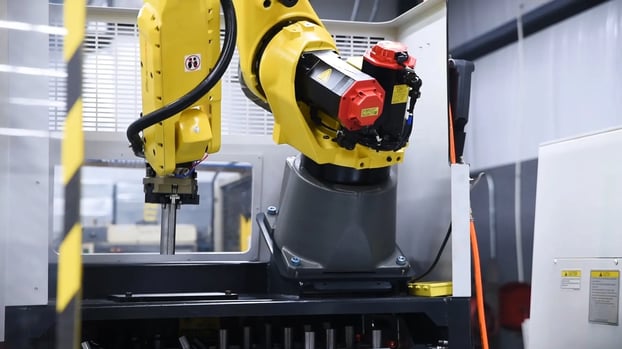
Robotic machine tending is one of the most common applications for beginning to integrate automation and a practical addition to precision manufacturing. It automates a repetitive but crucial part of the machining process: loading and unloading CNC machines.
A CNC machine may be capable of holding tight tolerances, but the surrounding setups must present each part consistently. Differences in loading, positioning, or part handling can introduce unnecessary variation. A CNC machine tending system follows the same programmed sequence every cycle, ensuring that part interactions with the machine remain consistent across multiple runs.
When included in the automation solution, robotic systems can also support reliable transfers between operations, as well as part cleaning, inspection, and other downstream processes. The right configuration depends on the part, machine, workholding requirements, quality expectations, and production workflows.
Achieving this repeatability enables manufacturers to run a more stable process and gain greater confidence in their ability to meet precision requirements across production runs.
Robotic Machine Tending Helps:
- Standardize part loading and unloading
- Improve part presentation consistency
- Support repeatable production workflows
- Reduce handling-related variation
- Strengthen overall process reliability
For businesses focused on precision, robotic machine tending helps connect CNC machine capability with the process consistency required to sustain it.
Technologies Enabling Precision Manufacturing Automation
Automated precision manufacturing typically involves multiple technologies working together. CNC machines perform the machining operation, while supporting technologies help control part handling, monitor the process, and verify production results.
Precision Manufacturing Automation May Include:
- CNC machining systems
- Robotic machine tending
- Vision and inspection systems
- Sensors and process monitoring tools
- Automated part handling
- Integrated workholding
The right combination depends on the application and its production goals. Manufacturers should evaluate how each component contributes to repeatability, process control, and quality, then select an automation approach that solves a defined manufacturing need.
Together, these technologies can create a more stable production environment that supports the demands of precision manufacturing.
Industries Benefiting from Precision Manufacturing Automation
Precision manufacturing automation is relevant wherever component quality, reliability, and consistency directly affect product performance.
Common Precision Manufacturing Applications:
- Aerospace components
- Medical devices and instruments
- Automotive parts
- Electronic elements
- Industrial equipment
- High-precision machined parts
Each application has different specifications depending on the industry, but all require a controlled process that delivers consistent results. Automated precision manufacturing builds repeatability into production, helping manufacturers maintain variation throughout the operation rather than relying on inspection alone to detect it afterward.
Obtain a More Repeatable Precision Manufacturing Process
Integrating automation with CNC machinery is becoming more common in high-precision manufacturing processes. Precision manufacturing automation helps manufacturers create stable, repeatable workflows that support consistent quality across production runs. The right automation solution can strengthen the operation that surrounds an accurate CNC machine by reducing variation in part handling and other repetitive tasks.
Ready to get started and turn your manufacturing process into a precision-oriented business with automation? AWR works with manufacturers to evaluate their production environment and identify a machine tending approach that best suits the specific application.