

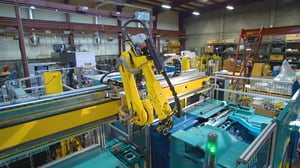
July is one of the most important planning months in manufacturing.
By mid-year, most companies have enough production data to identify real constraints - capacity limits, labor inefficiencies, and early signs of quality drift - and still have enough time to correct the course.
A structured mid-year manufacturing check-in is designed to help shops evaluate where operations stand today and determine where strategic automation can create leverage before the second half of the year.
Mid-Year Manufacturing Assessment: CNC Operations
Capacity & Throughput in CNC Machine Tending
Capacity challenges often emerge gradually in CNC machine shops: missed delivery dates, longer lead times, or work declines due to limited machine availability.
Mid-year is the right time to ask:
Are CNC machines meeting customer delivery expectations consistently?
Has work been turned down due to capacity constraints?
What's the actual machine utilization vs. available spindle time?
Where are bottlenecks limiting throughput?
Labor Utilization & Workforce Stability in Manufacturing
One of the biggest and most unpredictable variables is labor availability. Aside from headcount, businesses should assess how labor is being used:
How has staffing impacted production so far this year?
Are skilled operators performing repetitive, low-value tasks?
How are summer vacation schedules affecting coverage?
Are current working conditions competitive for attracting and retaining talent?
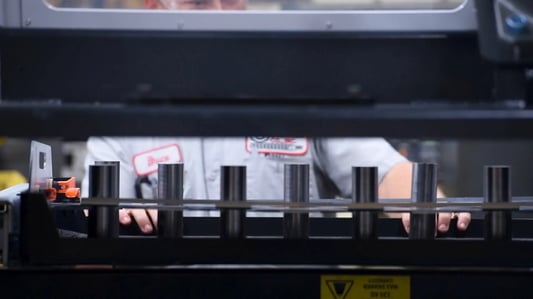
CNC automation and robotic machine tending provide a predictable way to stabilize output while allowing skilled workers to focus on higher-value tasks: setup optimization, quality problem-solving, and continuous improvement.
Quality & Consistency in Automated CNC Workflows
As production volume increases, small inconsistencies become more visible and more expensive.
The half-year mark is an ideal time to evaluate:
Scrap and rework rates compared to targets
Whether quality issues increase during longer or unattended production runs
Any lost or at-risk work driven by consistency concerns
The true operational cost of quality issues beyond scrap alone
For CNC operations, consistent part handling and repeatable automation processes are essential for maintaining customer trust as output scales.
Financial Performance and Cost Control in Robotic Automation
Financial metrics reveal whether production inefficiencies are quietly eroding profits, so mid-year, it's important to ask:
Are margins on track with projections?
What factors are increasing operating costs?
Could lower labor or downtime costs make bids more competitive?
How could additional capacity influence long-term ROI?
CNC machine tending automation typically influences multiple cost drivers simultaneously: labor efficiency, uptime, and rework reduction. Ultimately, creating a measurable impact on both short-term profitability and long-term competitiveness.
Competitive Position in Automated CNC Manufacturing
Automation continues to increasingly separate manufacturers who scale reliably from those who struggle to keep up. Ask honestly:
Are competitors winning work we're losing?
What operational advantages do they appear to have?
Are you positioned to support and capture growth opportunities?
What would make your business the obvious choice for customers?
In most CNC environments, responsiveness, consistency, and dependable capacity become the real drivers of competitive advantage, not the lowest price.
Viewing the Results Through a Strategic CNC Automation Lens
When mid-year assessments reveal gaps in capacity, labor utilization, or efficiency, automation becomes less theoretical and more tactical.
Well-designed machine tending does not address these challenges one at a time; when implemented correctly, it addresses them simultaneously.
A practical robotic approach can:
-
Increase spindle uptime without adding headcount
-
Reduce dependancy on manual tasks by freeing skilled workers for higher-value tasks
-
Improve consistency across longer and unattended production runs
-
Provide greater operational stability during staffing variability
For many CNC shops, the half-year mark is when automation shifts from "someday" to "necessary" to support growth and profit margins and reduce day-to-day risk.
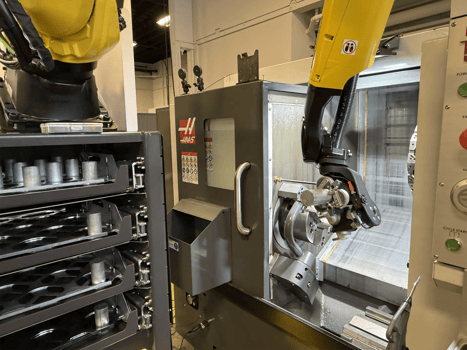
Why July and August Are Ideal For CNC Automation Planning
Summertime is often underestimated as a slow season. But strategically, it's one of the strongest windows for automation planning.
- Project Timing: CNC tending systems scoped now can be installed and producing by fall
- Budget Alignment: Q3 planning helps build a clear case for Q4 capital decisions
- Operational Correction: There is still time to correct issues that will shape next year's performance
- Seasonal Advantage: Implement automation before holiday and year-end staffing challenges arise
- Competitive Positioning: Adapt now while others delay, strengthening responsiveness, capacity, and delivery reliability
Manufacturers who plan early avoid rushed decisions and are better positioned to standardize workflows, stabilize output, and scale confidently.
The Summer-Specific Opportunity Manufacturers Overlook
Vacation-driven staffing challenges aren't just seasonal inconveniences — they highlight the operational reliance on manual processes.
Lights-out manufacturing capability allows:
-
Production continues to run during PTO and shift gaps
-
Dependence on temporary or short-term labor is reduced
-
Output remains consistent regardless of daily attendance
-
Operators gain a better work-life balance instead of covering constant overtime
-
The shop gains a competitive edge during industry-wide slowdowns
Summer often exposes these constraints more clearly. The strategic question is whether they're addressed now or carried into another year.
The CNC Automation Conversation Worth Having Now to Finish the Year Strong
The core question is not: "Should we automate eventually?"
It is: "What is preventing us from solving these bottlenecks today?"
Manufacturers who act on current constraints rather than waiting for ideal conditions are better positioned for sustained growth. Instead of scrambling in Q4, they're making informed, deliberate decisions by using real data from mid-year check-ins to guide automation investments.
A mid-year manufacturing assessment creates clarity: CNC machine tending automation turns that clarity into action.
Where does your operation stand today — and what would a stronger, more stable second half of the year look like?
Automation Within Reach helps manufacturers evaluate where CNC machine tending makes sense — practically, accessibly, and without unnecessary complexity.
Start the conversation today by reaching out to our team.
