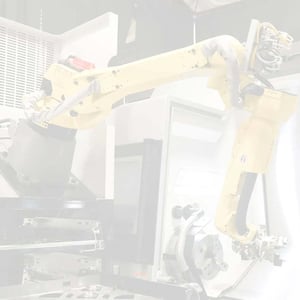
What is Automated Machine Tending?
Machine tending is a foundational process in modern manufacturing and a key driver of CNC automation. While images of robotic arms and automated production lines often come to mind, people, and increasingly robots, play a critical role in keeping machines running efficiently. At the center of this process is machine tending: the loading of raw material into machines and the unloading of finished parts to maintain continuous, productive operation.
As manufacturing technology advances, robotic machine tending has transformed how manufacturers approach efficiency, precision, and labor challenges. Understanding machine tending and how automation enhances it helps manufacturers make informed decisions that improve productivity, reduce downtime, and strengthen competitiveness.
Understanding CNC Machine Tending
Machine tending is the process of loading raw material into a CNC (Computer Numerical Control) machine and unloading finished parts after machining. This process is essential for maximizing spindle uptime and ensuring continuous operation across various industries, including CNC machining, metalworking, injection molding, and automated assembly.
The role of a machine tender extends well beyond basic part handling. Responsibilities typically include:
- Loading and unloading raw materials and finished parts
- Monitoring machine performance during production cycles
- Conducting in-process quality checks
- Making adjustments to speeds, feeds, or offsets to maintain part quality
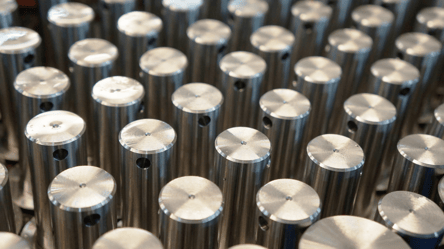
This hands-on involvement is critical to minimizing downtime, maintaining consistent throughput, and keeping production running efficiently.
Challenges of Manual Machine Tending
Traditional manual machine tending is labor-intensive, repetitive, and highly dependent on skilled operators. As CNC machines become more advanced, the level of expertise required to operate and monitor them continues to rise. At the same time, the manufacturing labor pool continues to shrink.
Manual tending also introduces variability. Operator fatigue, inconsistent loading, and delayed response times can lead to machine downtime, scrap, and missed production targets. Even short interruptions can significantly impact profitability when machines sit idle.
Instead of focusing on what can go wrong, here's how automation solves these challenges:
Optimize CNC Utilization
![]()
Keep machines running consistently and reduce idle time
Improve Throughput

![]()
Eliminate manual delays and accelerate production cycles
Enhance Workplace Safety

Reduce operator exposure to hazards and repetitive tasks
Reduce Labor Dependency

![]()
Address workforce shortages and redeploy skilled talent
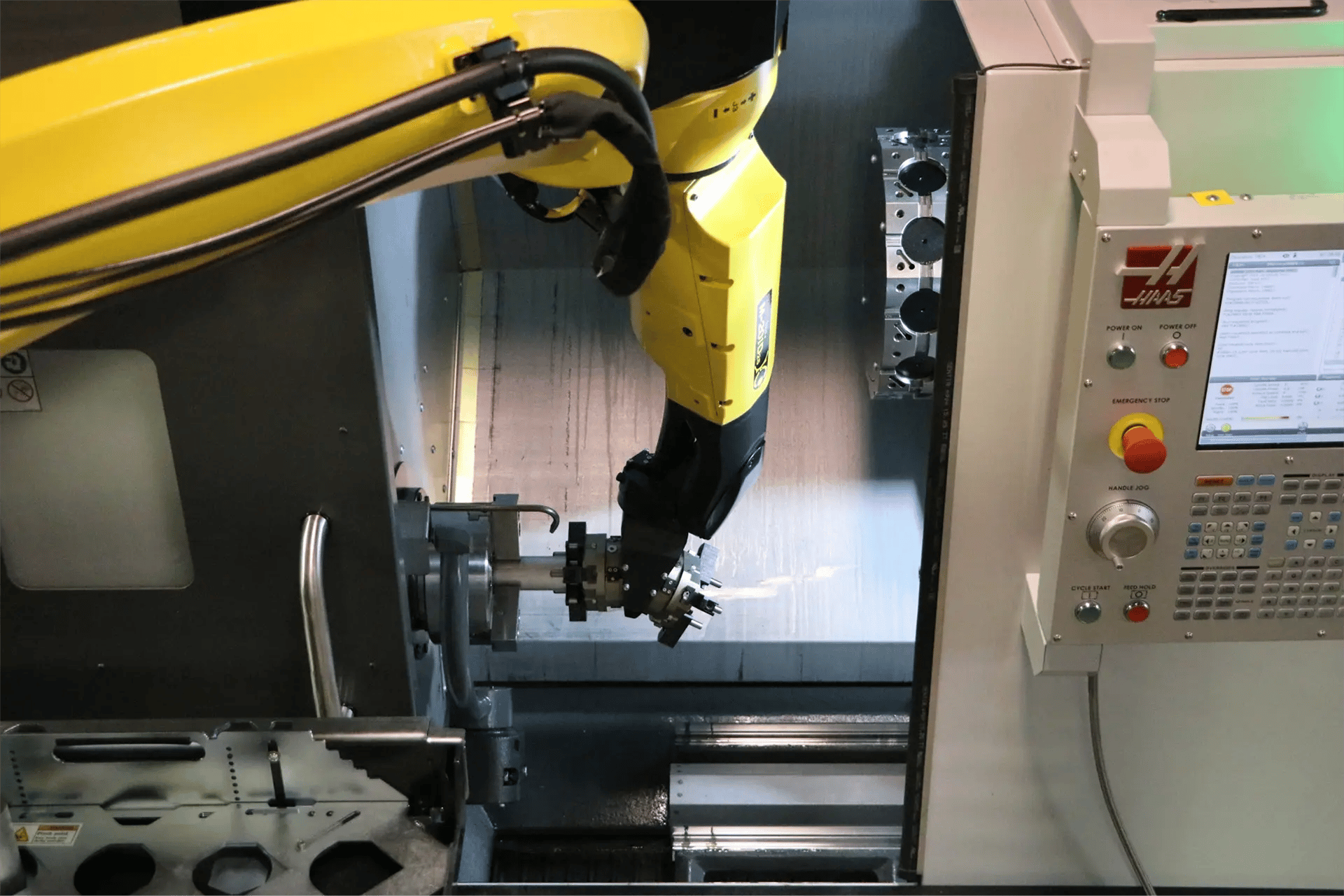
Robots in Machine Tending
Robotic machine tending transforms how your shop operates day-to-day by delivering higher efficiency, predictable output, and a safer work environment. By automating repetitive loading and unloading tasks, robots increase CNC machine uptime and reduce the risk of human error.
When robots manage part transfer, your skilled machinists can stay focused on the work that truly drives results: refining processes, programming, troubleshooting, and ensuring quality. That’s critical in a market where experienced CNC talent is hard to find and harder to keep.
Machine tending robots also provide a practical path to increased capacity without adding headcount, enabling extended unattended machining and true lights-out operation, so you can produce more with the team you already have.

Benefits of Robotic Machine Tending
Machine tending robots deliver more than just automation; they transform the way manufacturers approach productivity, quality, and workforce challenges. By replacing repetitive manual tasks with precision-driven robotics, companies can unlock higher machine utilization, reduce operational costs, and create safer, more efficient shop floors. These benefits extend beyond immediate gains, positioning manufacturers for long-term competitiveness in an evolving industry.
Continuous Operation

Unlike manual labor, robots can perform and operate repetitive tasks nonstop without fatigue. Automated machine tending enables extended run times, including nights and weekends, increasing throughput and ensuring the quality of finished products, ultimately maximizing return on CNC equipment investments.
Enhanced Precision and Consistency
Robots can perform tasks with a high degree of accuracy, ensuring that each part is handled consistently every time. This level of consistency is difficult to achieve with manual labor, where human error can lead to variations in product quality. Machine tending robots help manufacturers meet tight tolerances, reduce defects, and maintain stable, predictable part quality.
Improved Workplace Safety
Machine tending often exposes workers to heavy parts, sharp tools, and repetitive motions. By handing those tasks to a robot, manufacturers significantly reduce the risk of injury and create a safer, more sustainable work environment on the shop floor.
Increased Profitability 

By maximizing spindle uptime, cutting scrap, and enabling multi-shift operation without adding headcount, robotic machine tending drives down the cost per part and strengthens profit margins. Manufacturers can run more jobs, produce more good parts, and achieve greater output from the same equipment and labor.
Flexibility and Adaptability
Modern robotic machine tending is designed for real-world production environments where part numbers change, and batch sizes fluctuate. With quick changeovers and adaptable part handling, automation allows manufacturers to pivot quickly, take on more varied work, and maintain consistent cutting as schedules and priorities shift.
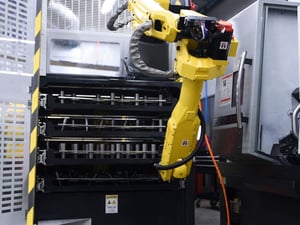
Applications of Machine Tending Automation
Automated machine tending is revolutionizing how manufacturers across all sectors operate their CNC operations. Shops that have yet to integrate robotic tending into their day-to-day production are leaving significant gains in throughput, consistency, and labor efficiency on the table.
Automotive Manufacturing
Robotic machine tending supports high-volume production of engine components, transmission parts, and precision automotive components by improving cycle consistency and reducing downtime. Automating CNC machine loading and unloading increases precision and repeatability, helping manufacturers meet strict automotive quality standards.
Machine tending robots also reduce cycle times, maximize spindle utilization, and increase throughput to meet high production demand. At the same time, automation improves workplace safety and allows skilled labor to focus on higher-value tasks.
Metalworking and CNC machining
In CNC milling, turning, and grinding operations, machine tending automation uses a robot to handle raw stock and finished parts with consistent accuracy and reliability. This approach reduces defects and rework while maintaining tight process control.
Machine tending automation also integrates easily with inspection, cleaning, and secondary operations, enabling streamlined workflows that improve efficiency, reduce labor dependency, and support scalable production.
Plastics and Injection Molding
In plastics and injection molding operations, machine tending automation replaces labor-intensive manual handling by using robots to load raw plastic pellets into injection molding machines and remove finished parts after they have cooled and solidified. This approach reduces cycle times while ensuring consistent, careful part handling that minimizes damage and defects in high-volume production environments.
Electronics Manufacturing
In electronics manufacturing, automated machine tending systems handle delicate components with the high precision and cleanliness required for assembly and testing operations. Robots place circuit boards into manufacturing equipment and remove them after soldering or inspection, while operating reliably in cleanroom environments to reduce contamination and defects. Equipped with vision systems, machine tending robots perform intricate tasks with precision, making them well-suited for handling the small, delicate parts commonly found in electronic devices.
Food and Beverage Industry
In the food and beverage industry, robotic machine tending improves hygiene, consistency, and throughput while supporting fast changeovers for different products and packaging formats. Robots handle tasks such as loading ingredients, packaging finished products, and performing quality checks with speed and repeatability, reducing contamination risk and helping manufacturers meet strict safety and quality standards.
Designed for sanitary environments, machine tending robots are easy to clean and maintain, supporting food safety requirements. Their flexibility also allows manufacturers to quickly adapt to changing demand by reprogramming systems for new products or packaging, maintaining productivity in a competitive market.
Aerospace Manufacturing
Aerospace manufacturing requires exceptional precision and reliability for critical components. Automated machine tending ensures consistent quality when producing turbine blades, structural parts, and precision fittings. Robots handle loading and unloading with accuracy, eliminating human error, and maintaining tight tolerances.
Automation also enables 24/7 lights-out operation, boosting production rates and helping manufacturers meet strict deadlines. By delivering repeatable processes and reducing rework, robotic systems support compliance with stringent aerospace standards while improving overall efficiency.
Getting Started with Machine Tending Automation
Automated machine tending is a proven path to greater productivity, improved safety, and higher CNC machine utilization. By reducing labor dependency and enabling unattended operation, manufacturers gain a competitive edge in today's demanding environment.
Automation Within Reach (AWR) offers three solution categories designed for real-world CNC environments:
- Flex Series: Simplified automation for CNC lathe and mill operations. These systems feature user-friendly HMIs, integrated safety, and versatile part-handling options for high-mix, low-volume shops.
- Plus Series: Pre-engineered automation for complex workflows and higher throughput. Ideal for manufacturers seeking more customization and integrated processes.
- Custom Automation: Fully tailored CNC solutions for unique production needs, ensuring maximum flexibility and performance for specialized applications.
Robotic machine tending increases CNC productivity and simplifies your shop’s workflow, maximizing the consistency, output, and utilization of every machine.