

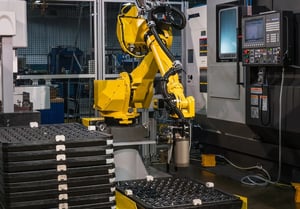
Robotic Automation Cell Cuts Cycle Time in Half

The U.S. headquarters of SEWEURODRIVE in Lyman, South Carolina is an impressive 250,000-sq.-ft. facility that produces over 300,000 gear sets and gear boxes each year.
The facility is the sole manufacturer of these products that are used worldwide in conveyors, cranes, water treatment plants, roller coasters and myriad other applications. The plant has nearly 100 industrial robots that help automate production of the component parts, so it was no surprise when Mechanical Engineering Technician Keith Waller turned to robotic automation to produce a new series of small diameter pinions.
According to Waller, “We process most of our pinions from blanks using face drivers, but we recently began producing a new series of pinions with diameters as small as 3 mm, which makes it virtually impossible to use a face driver. Instead we end-milled and centerdrilled the workpieces, put them on a lathe for turning between centers and then milled a keyway. Obviously this wasn’t very efficient, so we looked for a better approach.”
“We invited four companies to propose a turnkey, robotically automated cell that would reduce production time, operator involvement and, because we will ultimately run 45 different pinions through the system, also eliminate lengthy changeovers.”
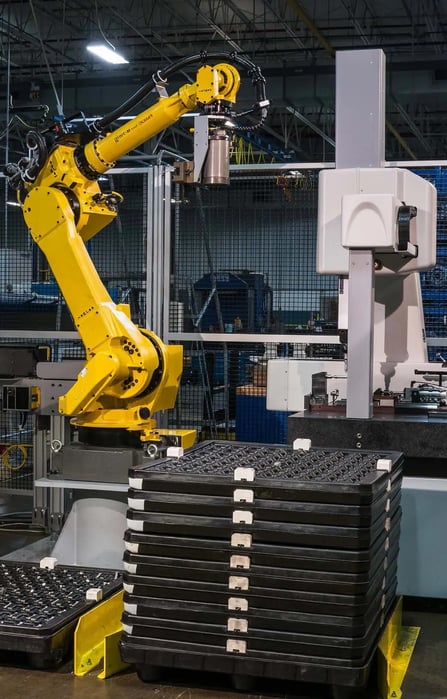
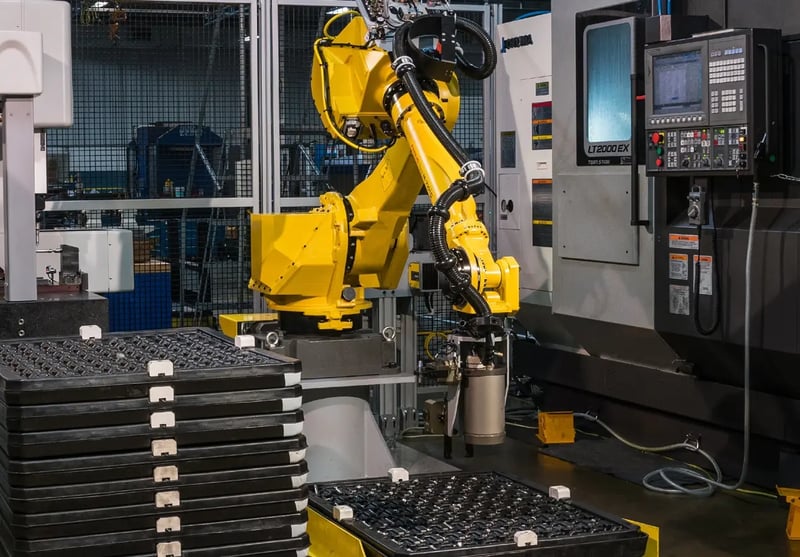
Using iRVision equipped with infrared light, the robot places the completed part into an outgoing tray. Once the tray is filled with completed parts, the robot takes an empty tray from an adjacent stack, placing it on top of the full tray. When the outgoing tray stack reaches its prescribed height, the system alerts the operator to remove the finished stack of parts and bring in another stack of empty trays.
In addition to reducing both production and operator time, the new cell provides an unexpected but welcomed benefit. “We were having some problems controlling runout during the turning process,” Waller explains. “Once the pinions leave the work cell, they go to a gear cutting operation where they are clamped by collets on the ODs for teeth cutting. Then, they go to the grinding operation to make the journals. These operations won’t be accurate if we haven’t held the runout during turning to less than 20 microns. In the past, we had a hard time achieving that tolerance and the operator spent a lot of time fighting runout. The automated cell routinely holds runout to between six to ten microns, which has cut the operator’s involvement by 50 percent.
“We operate the automated cell three shifts per day, five days each week running lots of 8,000 – 10,000 pinions. Our operators are extremely happy with the cell and how easy it was to learn and run it. We’ve worked with a lot of automation companies. Gosiger Automation ranks right up there as one of the best, with the entire process of design, build and installation going smoothly.”

Explore Our CNC Automation Solutions
Maximize your CNC potential with AWR's comprehensive machine tending automation. Our automation systems eliminate production bottlenecks across lathe and mill operations, delivering consistent quality and reliability that drive manufacturing success.
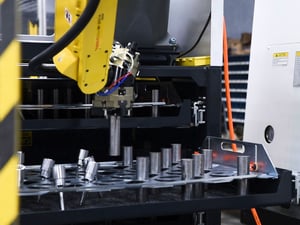
The AWR Flex Series offers standard automation solutions designed to streamline production and reduce costs. Designed specifically for single CNC lathes and mills, our DC, RC, and RCX systems streamline machine loading and unloading operations, minimize costly downtime, and optimize skilled labor utilization—delivering the straightforward implementation and instant productivity gains that drive manufacturing success.
Read More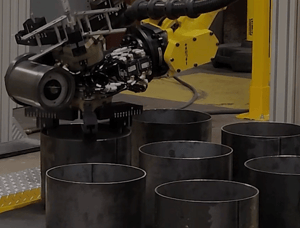
The Plus Series delivers automation without compromise—combining the speed of pre-engineered solutions with the precision of custom applications. Our proven Pallet, Drawer, and Conveyor options provide 80% complete automation foundations, enabling rapid implementation while maintaining the flexibility for specialized end-of-arm tooling that meets exacting manufacturing specifications.
Read More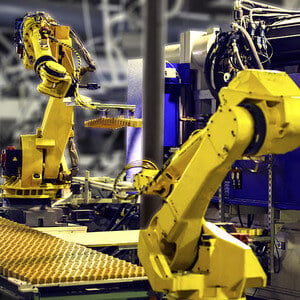
When your production challenges demand solutions beyond standard automation, AWR's Custom Integration Solutions provide the engineering expertise to transform complexity into operational excellence. Our comprehensive approach addresses unique manufacturing requirements through fully tailored systems—designed, built, and tested to optimize multi-step processes and specialized applications—bringing smarter automation within reach.
Read More
You Next Step Toward Smart Manufacturing
Whether you're scaling CNC operations or optimizing machine tending, AWR's team is ready to help you achieve more with automation.
