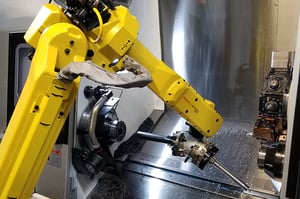
Since their invention, robotics for parts machining production have been associated with their fair share of myths. With today’s robotics, according to Mark Eddy, Founder of Gosiger Automation, these myths are not defensible.
Myths, Busted.
Here are the most common myths about machine tooling automation.
Only large corporations can afford or justify robotics.
In fact, most manufacturers have limited opportunities to differentiate themselves from the competition. Changes in equipment, tooling, materials, financial resources, and people can allow most manufacturers to match their competition. The biggest area for differentiation lies in processes, including business, quality and, importantly, manufacturing processes.
They allow you to maximize use of the assets you already have, increase production capacity, simplify production scheduling and make your per man hour productivity soar. Your ability to flexibly
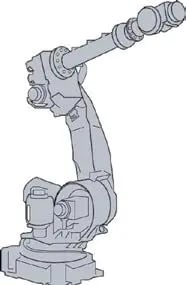
respond to customer needs while still insuring quality and consistency will increase. Best of all, your direct labor content will decrease, bringing down overhead. Traditional thought says that to increase production capacity, you should add more people and equipment. But best practices in manufacturing, using today’s robotics, says that to increase capacity, you need to maximize use of the assets you already have in place. Robotics are a key way of achieving that maximization.
Robots are only good for high volume production.
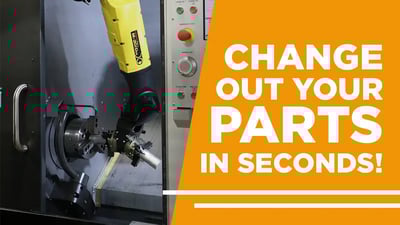
In fact, one robot type can often be used to work on a variety of tools, making automation a more realistic option for smaller manufacturers who want to optimize output or work in small lots. And once robotics are installed, they can be reprogrammed to expand their operations as your process grows in capabilities or equipment. Once you realize the possibility that automating your machine tooling operation may be a good fit, you may want to consider opportunities for robots to add value (giving you new profit opportunities). Automated operations that can be added to your current manufacturing process include: palletizing or de-palletizing, deburring, marking parts, inhibiting rust, inspecting or probing special gauges or CMM or completing secondary operations such as drilling, turning or pressing.
Robotics are also a strong promotional tool. Once you deploy automation in your manufacturing processes, you’ll find that potential customers will be impressed by your innovative processes and ability to flexibly address their needs.
Robots can take a long time to set up and change over.
Robot change over isn’t unnecessary as often as you think. Often, an entire family of parts can be manufactured without change over. Asking the right questions up front will help assure that you get the most efficient use of robotics, with minimal set up and change over.
Programming a robot is too difficult.
At Automation Within Reach, you will always receive training to assure that you understand how to work with your automation solution. Automation Within Reach Technicians are available to help with troubleshooting as you need it, to assure that your operation runs smoothly.
Robots are a maintenance headache.
Once initial set up is completed, robotics maximize manufacturing productivity. Robots require no vacation, sick leave, holidays, insurance, or other downtime. Programmed correctly, they rarely make mistakes. They are fast and accurate, creating a consistent record of quality and delivery speed. Since robots minimize direct labor dependence in the manufacturing process, they help the it run smoothly and efficiently.
Our employees won't accept robots.
Many employees suffer with ergonomic issues or from repetitive task injuries due to non-automated manufacturing equipment. Automating your manufacturing process improves the safety conditions of your operation and the quality of life of your employees, minimizing health and safety issues. It frees them up to take on tasks that require more of their unique expertise and judgment. The fact that you are using robotics can be a powerful recruiting aid in helping you attract employees who are comfortable with technology and with efficient processes.
Robotics Quiz
Now that you understand how robotics can be a viable solution no matter the size of your manufacturing operation, you may wonder if automation is right for your particular needs. How can you tell if robotics are right for your business? Simply ask yourself these questions:
Do you have quality issues associated with improper or inconsistent part loading or missed operations?
Are your processes fundamentally stable?
Is employee turnover or attendance an issue due to repetitive motion injuries, absenteeism, or ergonomic issue-related lost time?
If you answered ‘yes’ to one or more of these questions, automating your process will likely help you to maximize productivity – and your bottom line, no matter the size of your operation. Automation Within Reach designs and implements robotic automation systems to meet your customers’ ever-increasing demands for higher productivity.
Visit www.automationwithinreach.com to learn how robotics can increase your profit and maximize use of your current resources, no matter what the size of your operation.