Skip to content
AWR-CUSTOM-SUCCESS-HYPERTHERM-CELL

Robotic Cell Increases Productivity 200% For Industrial Cutting Equipment Manufacturer

Gosiger Automation Helped Hypertherm, Inc., a Company Dedicated to Efficient and Environmentally-Friendly Solutions, streamline their processes, increase output and reduce waste with a new, automated machining process.

Revamping Processes to Improve Productivity

Hypertherm Inc., has come a long way since 1968 when founders Dick Couch and Bob Dean started in a New Hampshire garage. Today it’s an innovative, global leader in industrial cutting technology with more than 120 patents to its credit. Two important product lines are mechanized plasma cutters for shipbuilders, off-road/heavy vehicle producers and other large steel sheet users, and manual tools for such applications as oil field pipe cutting, auto repairs and general workshop use.

Due to increased demand for its products, the Hanover-based, employee-owned company recently built a new manufacturing facility. As part of the process, they analyzed their current production methods to find opportunities to streamline production and maximize ROI for their new building.

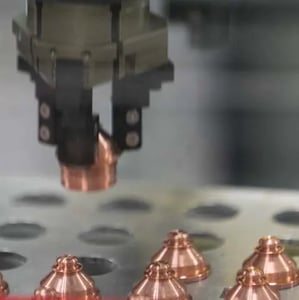
AWR-CUSTOM-SUCCESS-HYPERTHERM-CELL


Although the primary goals were to improve productivity and efficiency, Hypertherm also has aggressive environmental goals, so its 1400 employee-owners continuously look for ways to reduce material waste and power usage. With all of this in mind, Manufacturing Engineer Jeff Cornish cast a critical eye on the production of three nozzles used by owners of HyPerformance HPR plasma systems.

According to Jeff, “We were running the parts on large, 3-turret CNC lathes with 75-second cycle times, and with one operator typically overseeing two to three machines. These lathes machined the nozzles out of bar stock loaded by automatic bar feeders. The process created a lot of material waste and the combination of the bar feeders and machine tools took up quite a bit of floor space. One way we measure productivity is output-per-square-foot of factory floor space. By that standard alone we knew we had to find a better way.”

Ground Work

Achieving these results took a group effort involving Hypertherm, R. E. Morris, and Dayton, Ohio-based robotic systems integrator, Gosiger Automation. After considering several possible approaches, the team decided on a robotically automated work cell using two Swiss-style Tsugami CNC machines. Two Fanuc LRMate 200iD industrial robots load the machine tools, and two M-10iA robots unload the parts.

“A big change was switching from bar stock to near net shape blanks,” Morris Co.’s Dan Dean explains. “These blanks —some made in-house by Hypertherm and some by an outside contractor—are well suited for these sliding headstock lathes to machine the blanks to the required tolerances and surface finish.

“We’ve had a long and successful relationship with our machine-tool distributor, The Robert E. Morris Co., so we approached their Manufacturing Specialist, Dan Dean, to discuss how to improve productivity by 50 percent for this process. To establish a productivity baseline, we took our existing machine tool footprint and calculated the output-per-day. It took us a while to come up with the best solution, but the results were well worth the effort. Instead of a 50 percent improvement, we increased our output by 200 percent, improved output-per-operator by 50 percent and reduced scrap by 50 percent.”

AWR-CUSTOM-SUCCESS-HYPERTHERM-PART

To maximize the cell’s productivity we brought in systems integrator Gosiger Automation to automate the cell. They’re specialists in applying robotic automation and have a great deal of machine tool experience.”

“There was a lot of back-and-forth among all the players before a final plan emerged.” Jeff Cornish explains. “Brandon Mason was Hypertherm’s project manager, working with Dan and James Pulaski at Morris, and Mark Eddy and his team from Gosiger Automation. The more we got into the project, the more we saw additional opportunities for refinements, which meant Gosiger Automation had to come up with several iterations. I really appreciated their willingness to work through the process and come up with the best approach for our needs.”

Machining Process

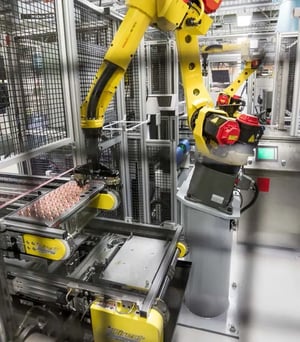
The process begins with the operator loading blanks onto a vibratory table that feeds them into a staging area. From here, a Fanuc LRMate robot picks up and loads the blank into the Swiss lathe’s main spindle. A laser scans the workpiece to make sure it’s seated correctly in the chuck. If not, the robot resets it into the spindle and checks it again. If a part fails to reseat properly it is rejected. The lathe then performs the front side machining and, when completed, the part is transferred to the subspindle for backside machining.

When the backside machining is complete, a pick-and-place system removes the machined part, takes it to a blow-off area and then places it in an outbound parts nest. A second M-10iA robot picks up the finished part and places it in a tray.

AWR-CUSTOM-SUCCESS-HYPERTHERM-ROBOT

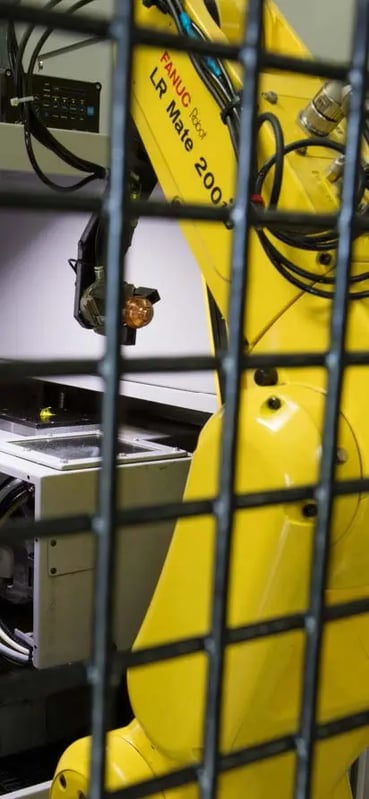
Right | A Fanuc LR Mate 200iD is used to load a Tsugami Swiss CNC turning center where each part is laser-checked for proper runout alignment in the work holding.

For quality control purposes, the M-10iA robot performs a thorough inspection process taking the last part to be placed in a tray through an ultrasonic wash station, then to a CMM for I.D. measurement and a laser profile inspection machine for O.D. measurement. These data are processed by Caron Engineering’s AutoComp software and fed back to the producing machine to enable tool wear compensation that maintains part accuracy.

Trays of completed parts exit the cell on an outbound conveyor. Meanwhile a laser barcode scanner identifies each empty, incoming tray to ensure that the correct parts are produced and placed in the appropriate trays. Completed parts are washed and laser marked in a secondary operation.

Cornish explains. “The finished project is much more than just machine tools and robots, it’s a completely rethought process. Everybody involved worked together to figure out how to make the cell as efficient as possible and, in the end, there were a number of factors that made the difference.”

“The cell has a lot of moving parts working together that allow us to improve productivity even more than we originally hoped.”

AWR-CUSTOM-SUCCESS-HYPERTHERM-FINISHEDPART

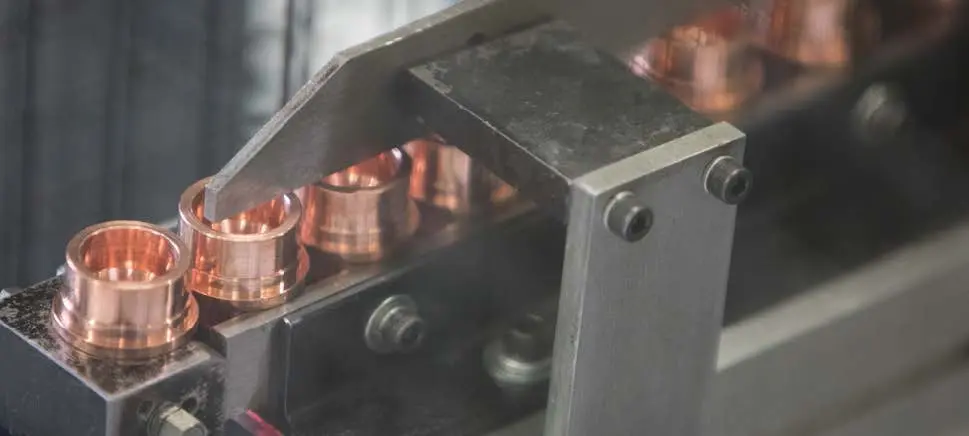
Above | The second robot places finished parts in trays.

AWR-CUSTOM-SUCCESS-HYPERTHERM-FEEDERTABLE

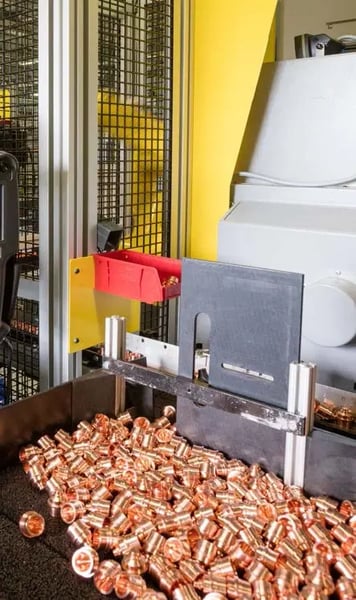
Above | Forged part blanks are poured from shipping boxes onto a bulk feeder table, oriented and fed through an escapement mechanism to a pick up location for the robot. The photo lower left shows parts feeding in-line into the robot pick up nest.

According to Jeff, those factors include:

  • Changing from machining bar stock to near net shape blanks reduced material waste and cycle time significantly.
  • The lathes have a smaller footprint than the previous machine tools. This factor, plus eliminating the bar feeder, greatly improved output-per-square-foot.
  • One operator tends the new work cell and other machines.
  • In-process inspections save time and labor costs.
  • Software-driven inspection data for automatic tool offsets eliminates human error, thus improving product quality and reducing scrap.
  • The Swiss-style machines are more consistent from a cold start, which eliminates bad parts at the beginning of a run.

“This was our first robotic installation and quite a learning experience,”

Jeff explains. “The results encouraged us to identify other machining processes that can be improved through automation, so we’re currently working with Gosiger Automation on additional projects.”

Explore Our CNC Automation Solutions

Unlock the full capability of your CNC operations with AWR’s advanced machine tending automation. Designed to streamline both lathe and mill production, our solutions remove bottlenecks, optimize workflow, and deliver the consistent precision manufacturers rely on to stay ahead. 
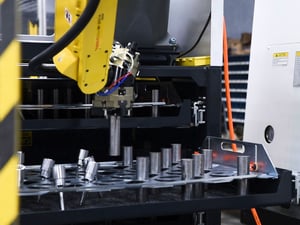
awrtill9_1
Read More
AUTOMATION SIMPLIFIED FOR YOUAWR FLEX SERIES

The AWR Flex Series delivers accessible automation engineered to accelerate your workflow and enhance profitability. Purpose-built for single CNC lathes and mills, our DC, RC, and RCX solutions simplify machine tending—eliminating production bottlenecks, driving down operational costs, and freeing skilled teams to focus on higher-value tasks. Experience rapid deployment, immediate uptime, and measurable results designed for manufacturers ready to advance.

Read More
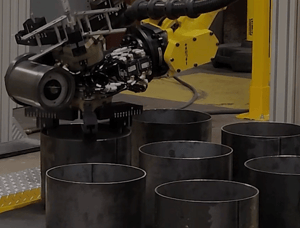
AWR_PC_PLUS-SERIES
Read More
AUTOMATION REFINED FOR YOUAWR PLUS SERIES

The Plus Series empowers manufacturers to automate with confidence—merging the efficiency of modular, ready-to-deploy solutions with the accuracy demanded by advanced production. Engineered configurations like our Pallet, Drawer, and Conveyor systems deliver up to 80% turnkey automation from the start, allowing you to accelerate deployment while retaining the freedom to tailor end-of-arm tooling to your unique process requirements.

Read More
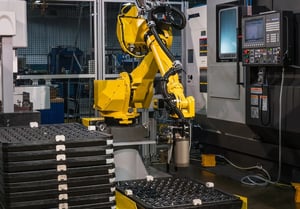
AWR-CUSTOM-SUCCESS-SEWEURODRIVE-ROBOTPALLETS-02
Read More
AUTOMATION CRAFTED FOR YOUCUSTOM AUTOMATION

When your operation calls for more than off-the-shelf automation, AWR Custom Integration Solutions deliver unmatched engineering insight—turning complexity into streamlined performance. We design, build, and validate fully customized automation systems that address your unique production needs, optimizing intricate workflows and specialized tasks. With AWR, smart automation is attainable, empowering you to achieve greater efficiency with confidence.

Read More

Experience the Power of Automation.