

ROBOTIC AUTOMATION IN THE JOB SHOP

Benefits of Robotic Automation for Job Shops
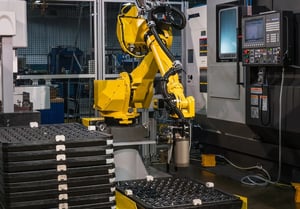
Human expertise will always be critical on the shop floor, but robots dramatically boost productivity by handling the repetitive, heavy, and ergonomically difficult work. Here are the core advantages of CNC robotic machine tending.
Reduced Labor Costs Through Automation

Long-term savings quickly offset the initial investment in automation. Robots reduce reliance on manual labor for repetitive or labor-intensive tasks like assembly, welding, and material handling. Factories using robotic automation experience fewer errors and defects, resulting in maximum output with minimal rework. Maintenance is minimal, and programming becomes simple with a well-trained team.
Improved Employee Retention
The U.S. is among the world's top manufacturing countries, yet America struggles to find and maintain skilled machinists. CNC automation helps bridge this gap by allowing robots to handle heavy, repetitive tasks, ultimately increasing overall productivity and reducing operator fatigue. Contrary to common myths, robots aren't replacing machinists; they are supporting them. As one manufacturer puts it:
"Automation is going to be the next thing, as we can't find people coming into our industry and wanting to be in manufacturing. This gives us the ability to increase capacity with another person, except it's a robot."
Joe Sterling
VP of Operations, Northern Kentucky Machine
Increased Profit Margin with Continuous Operation
Unlike humans, robots work continuously without breaks or fatigue, maintaining consistent speeds that reduce cycle times and increase output. Operating 24/7, robotic automation can support nonstop production, shorter lead times, and more reliable fulfillment of tight deadlines. With proper maintenance and operator training, manufacturers can extend the lifespan of CNC equipment and ensure ongoing performance.
Machine tending systems can also be quickly reprogrammed for new tasks, making them flexible and scalable for changing production needs. This adaptability allows manufacturers to respond to market shifts, ramp up peak demand, and introduce new products with minimal disruption. Ultimately, robotic automation streamlines operations by improving productivity and profit margins.
Enhanced Safety and Reduced Risk of Injury
Robotic automation enhances workplace safety by taking on hazardous, strenuous, or high‑risk tasks that would otherwise expose workers to dangerous environments or physically demanding activities. By reducing direct human involvement in these areas, manufacturers minimize accidents and human error. Robots follow strict safety guidelines—such as maintaining safe distances, operating within set speed limits, and shutting down automatically in emergencies—providing an added layer of protection. Automation also decreases long‑term strain by removing repetitive or ergonomically challenging tasks, helping prevent musculoskeletal injuries and promoting a healthier work environment overall.
Improved Part Quality and Consistency 
Robots deliver highly accurate, repeatable performance, allowing manufacturers to achieve consistent output and fewer defects. Their ability to perform the same task without variation ensures uniformity throughout the manufacturing process. CNC robotic automation also supports real-time monitoring and feedback, using sensors and inspection technologies to detect deviations and make immediate adjustments. This helps manufacturers identify and resolve issues early, maintain high-quality standards, and improve customer satisfaction. Leveraging these capabilities allows manufacturers to enhance efficiency, boost productivity, and create safer, more reliable production environments.
Overcoming Common Robotic Automation Challenges
CNC robotics, like any powerful technology, comes with its own set of challenges. Knowing what to expect and how to address it keeps your automation project predictable, productive, and on track.
System Integration Support
If your current tools are no longer helping you meet production goals, it may be time for an upgrade. Transitioning to new technology can feel overwhelming, but robotic integrators typically provide training and support to make implementation easier. With AWR machine tending systems, your team receives hands-on assistance every step of the integration process.
User Adoption and Training
New technologies can feel intimidating, but modern solutions bring exciting opportunities. Robotic automation introduces new production capabilities, and with today's user-friendly designs, these systems are easy to learn and operate. With proper training on each machine and its features, operators can quickly gain confidence and become proficient with the new technology.
Maintenance Planning and Technician Training
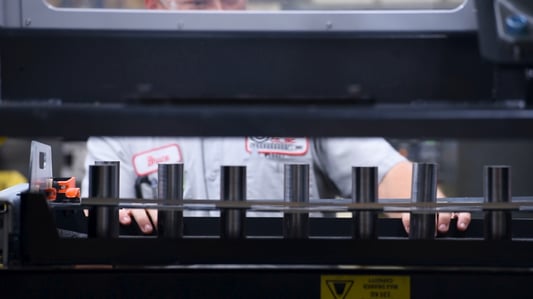
Robots require regular maintenance to perform reliably, and staying on top of upkeep can be difficult due to the specialized knowledge and time involved. Establishing a preventative maintenance plan that schedules routine service during low-demand periods helps extend equipment life and keeps the machine ready for peak performance. It's essential that both mechanics and maintenance staff receive ongoing training to ensure your team has the skills needed to service advanced robotic systems and prevent major setbacks.
Machine and Operator Safety Requirements
Robotic automation requires strong safety measures, as robots can operate with significant force and speed, which creates risks such as collisions, improper programming, or equipment malfunctions. Implementing clear safety protocols, supported by regular training and education, will ensure employees know how to operate safely around advanced machinery. Physical safeguards, such as barriers, safety zones, and emergency stop mechanisms, provide additional protection.
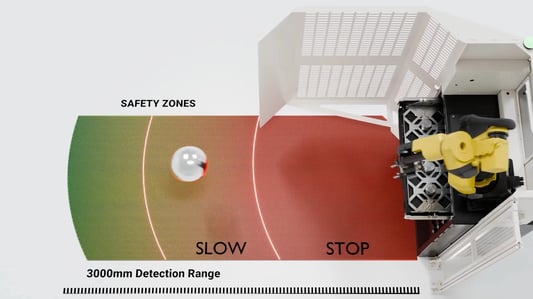
Adhering to industry standards, including International Organization for Standardization (ISO) and Occupational Safety and Health Administration (OSHA) guidelines, helps manufacturers minimize hazards and prepare their teams to safely integrate new robotic automation technologies.
Turn Robotic Automation From Idea to Reality
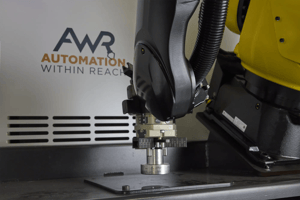
CNC machine tending automation is one of the most accessible ways to improve efficiency, safety, and ROI. With AWR's QuickTouch HMI, operators can easily manage multiple part types on a single machine.
By automating repetitive loading and unloading, AWR solutions help reduce labor strain, improve part quality, and increase profit margins. Ready to find the right fit for your shop?
