

Robotic Automation
If you are considering automating your CNC machining operations but have questions about cost, ROI, implementation, or operational impact, this whitepaper will help you evaluate whether robotic automation is the right fit for your shop.

Why Manufacturers Invest in Automation
This whitepaper explores the operational and financial advantages of robotic automation, regardless of machine tool brand, robot model, or system configuration.
The contributors have designed, built, installed, and supported hundreds of robotic automation systems for manufacturers ranging from small job shops to Fortune 100 companies.
Key Benefits
Regardless of the size or complexity of these automation systems, users enjoy results that are much the same.
Robotic automation systems can:
Increase productivity by reducing idle time, minimizing missed cycles, and maintaining more consistent production throughput.
Lower cost-per-part by supporting unattended operation and reducing labor-intensive tasks such as part loading, unloading, handling, and inspection.
Reduce operating costs by increasing output and enabling skilled employees to produce more parts with existing equipment and resources.
Increase production flexibility by supporting a wide range of part families and adapting quickly to changing production requirements.
Expand production capacity by producing more parts in less time and creating opportunities for additional throughput without adding equipment.
Improve part quality and consistency by ensuring repeatable part handling and reducing process variation.
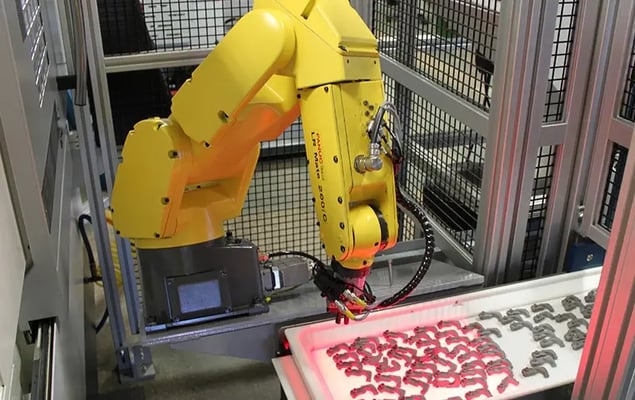
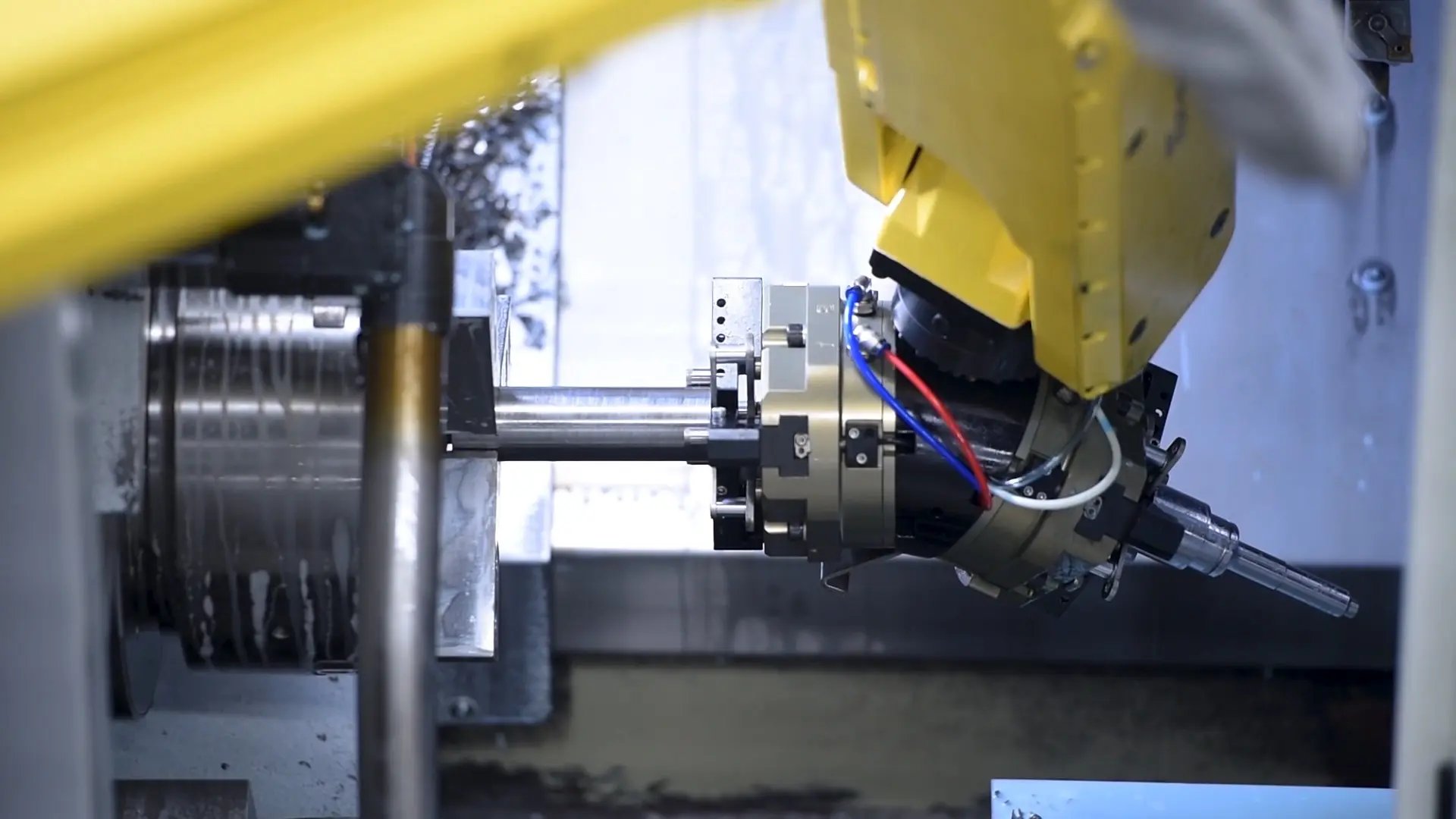
Today’s industrial robots are proven, reliable production tools capable of operating continuously with minimal intervention. When integrated into a CNC machining process, robots help manufacturers increase machine utilization, maintain consistent throughput, and support production even when skilled labor is difficult to find. Despite widespread adoption in manufacturing, many CNC operations still have opportunities to automate repetitive machine-tending tasks and unlock additional productivity gains.
Is Your CNC Operation Ready for Automation?
Robotic automation can help businesses increase throughput, reduce production delays, and achieve more value from their existing equipment and workforce. The question is whether these benefits could create a meaningful impact on your operation.
Is your operation reaching its full production potential? The difference between current output and achievable output can reveal opportunities to increase capacity, improve throughput, and drive additional revenue.
What is preventing your operation from reaching its full production potential? Many production constraints stem from repetitive manual tasks that consume valuable time and resources. Robotic automation can help address these challenges by handling routine machine-tending activities, allowing employees to focus on work that adds greater value to the operation.
Can your operators spend every minute of every shift focused solely on loading and unloading machines? In reality, skilled employees are responsible for a variety of activities, including setup assistance, inspections, material handling, quality checks, problem-solving, and communication with team members. Robotic automation helps keep production moving while allowing workers to focus on higher-value responsibilities.
Does one or more of the following apply to your operation?
-
You have CNC machines dedicated to specific parts or part families.
-
You produce similar parts that follow repeatable machining processes.
-
You have recurring weekly, monthly, or ongoing production requirements.
-
Your machining processes are stable and repeatable.
- Production is constrained by operator availability or labor resources.
-
Equipment is not producing at its full potential.
-
Part quality or consistency is affected by manual loading and unloading.
Are any of the following business challenges affecting your operation?
-
Increasing competitive pressure
-
Customer expectations for shorter lead times, lower costs, and higher quality
-
Difficulty attracting and retaining skilled labor
-
Rising labor and benefit costs
-
Increasing material and energy expenses
For most companies, the answers to these questions make a compelling case for automating at least some aspects of their operations. As labor challenges persist and production demands continue to grow, robotic automation has become a practical way to increase output, improve consistency, and remain competitive without significantly increasing headcount.
Understanding the Financial Impact of Automation
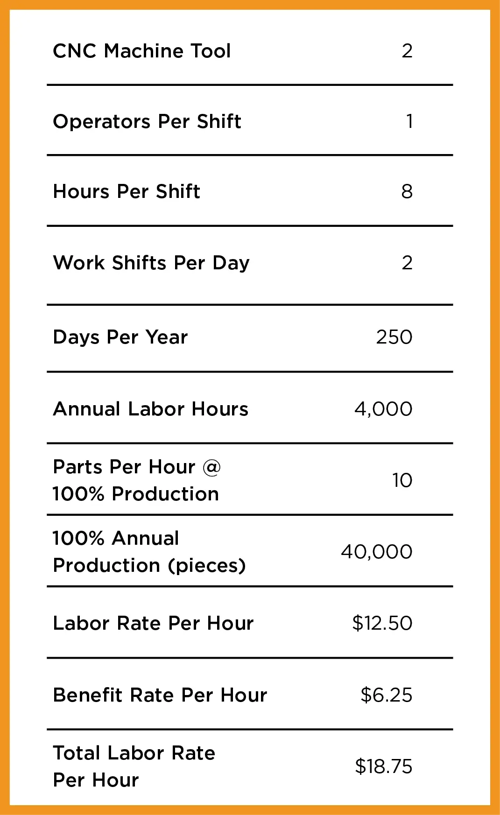
The first area to evaluate is direct labor cost. By automating repetitive machine-tending activities, manufacturers can produce more parts while spending fewer labor dollars on each piece produced.
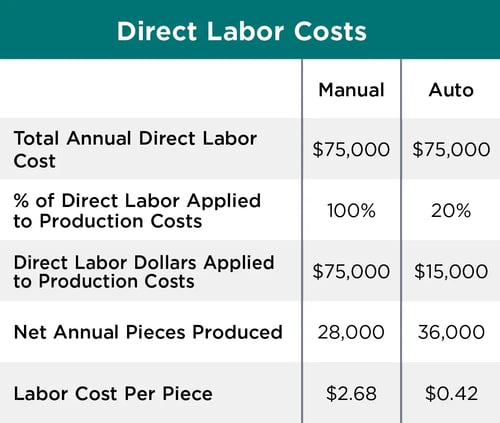
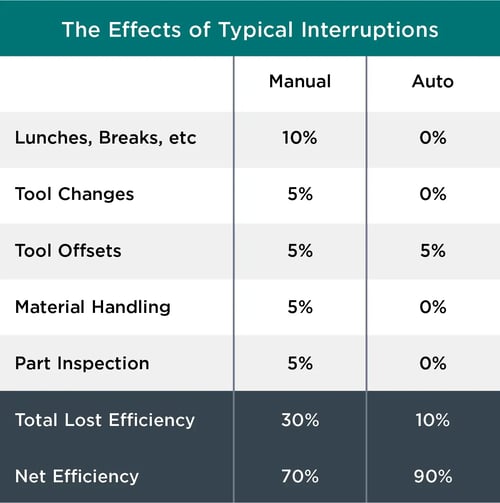
While robotic automation requires an initial capital investment, evaluating labor, production, and operating costs together provides a more complete picture of its long-term value. The following example highlights how increased productivity can offset investment costs while lowering the overall cost per part.
Next, consider the impact of capital investment. While automation increases upfront equipment costs, spreading those costs across a larger volume of production helps improve overall cost efficiency.
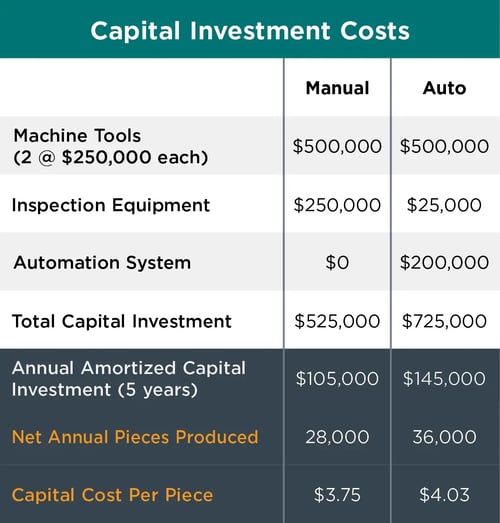
Automation often shifts costs from labor to capital investment. However, when evaluated over time, the combination of increased output and reduced reliance on manual machine tending can significantly lower the overall cost of production.
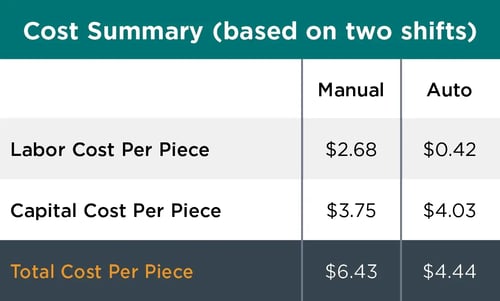
In this example, automation increases annual production from 28,000 to 36,000 pieces while reducing overall cost per part. The result is meaningful cost savings combined with additional capacity that can be used to support growth, reduce lead times, or take on new projects.
Now consider what your profit would be on the additional 8,000 pieces you can now produce. And, how does this increased production absorb overhead expenses?
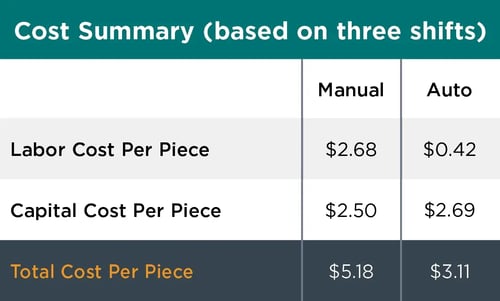
The benefits become even more significant when automation supports extended hours or unattended production. In this example, operating across three shifts increases annual output to 54,000 pieces while further reducing total cost per part.
Running 3 shifts increases production to 54,000 pieces from the automated system. The $2.07 total cost savings per piece brings the overall savings on 54,000 pieces to $111,780.
The examples in this whitepaper demonstrate how robotic automation can improve productivity, increase output, and reduce cost per part when applied to the right manufacturing process. The first step is understanding where automation can have the most impact. Automation Within Reach works with manufacturers to evaluate existing operations, identify automation opportunities, and develop solutions designed around their production goals.
Automation Within Reach specializes in CNC machine tending, material handling, palletizing, automated inspection, and secondary process automation. Backed by more than 30 years of automation experience and over 100 years of machine tool expertise, AWR delivers practical automation solutions for manufacturers to improve operations and remain competitive.
Ready to Explore Robotic Automation?
Boost productivity, reduce downtime, and stay ahead of the competition with CNC automation tailored to your operations. From installation to training and ongoing support, AWR ensures a smooth transition every step of the way.
